Journal/Environment
Designing a manure line that actually keeps up
Separators are sized on averages and fail on peak days. Here is how we set the buffer before choosing a machine.
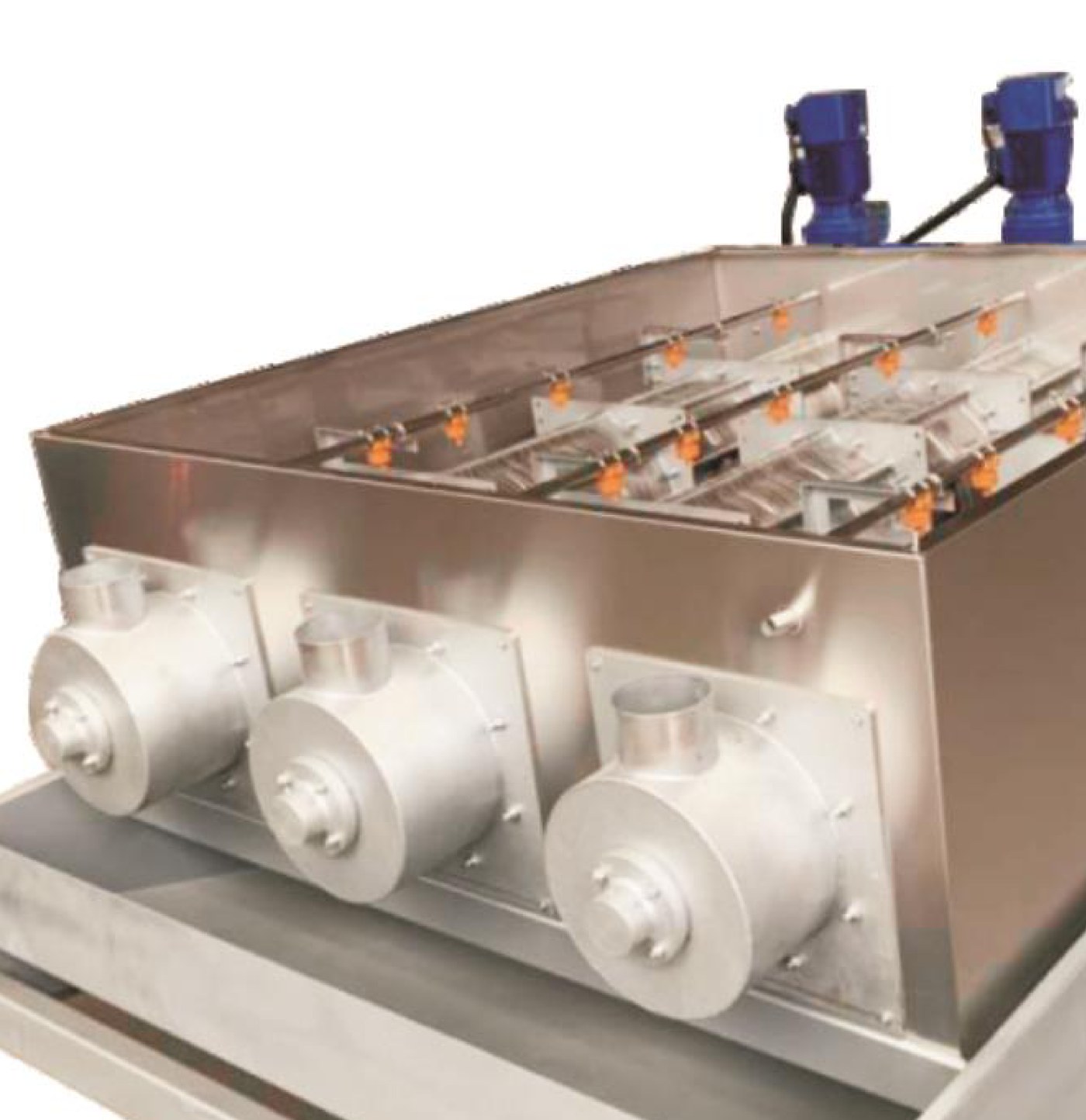
Multi-screw solid-liquid separator, 304 stainless contact parts.
A manure system is judged on its worst week, not its average one. Every separator on the market will handle an average Tuesday. The design question is what happens on the day three houses are washed down at once.
Separate first, store second
The single most common design error is treating storage as the primary system and separation as an accessory. It is the other way round. Every cubic metre you separate early is a cubic metre you do not have to agitate, pump, transport or store.
Solids removed at the source also keep their nutrient value in a form that is easy to stack, sell or compost. Slurry that has been sitting for a month has already lost part of that value to the atmosphere.
Choosing the separator
Three families cover almost every livestock application. They are not ranked — they solve different problems.
- Screw press. Continuous, high dry-matter output, low water demand. The default for pig slurry where the goal is stackable solids. Needs a steady feed and a screened inlet.
- Inclined screen. High flow rate, lower final dry matter. Good as a first stage ahead of a screw press, or where volume matters more than cake quality.
- Drum / roller. Gentler on fibrous material, which makes it the better choice for cattle and sheep manure and for bedding-heavy streams.
Scrapers and belts
Inside the house, the choice is between a scraper and a belt. Scrapers suit rectangular houses with straight alleys and a single collection point; they are simple, cheap to run and easy to service. Belt conveyors suit sheep and multi-tier layouts where the material is drier and the run is longer — a PVC belt can be set horizontal or inclined and does not need a water flush.
Size the buffer for the wash-down day, not the design day.
Closing the water loop
Separation handles solids. The liquid fraction still carries COD, BOD, ammonia nitrogen and phosphorus, and in most jurisdictions it cannot leave the site untreated.
Our standard train runs dissolved-air flotation ahead of a buried biological unit, with the treated water returned to flushing or irrigation. The buried configuration matters more than it sounds: it needs no building, no headroom and no operator, and the ground above it can go back to being a yard.
The sizing sequence we use
- Litres per day at design occupancy, by house.
- Peak day multiplier — usually the wash-down cycle, not the animal count.
- Buffer volume for the interval between collection runs.
- Only then, machine throughput.
Run it in that order and the separator ends up correctly sized. Run it backwards — pick a machine, then look for a flow that fits it — and you will spend the next decade explaining why the line backs up every second Friday.
Written by the KeMuHua engineering team · Xinxiang, Henan
All articles