Journal/Service
What a 72-hour fault protocol looks like in practice
A warranty is a document. A protocol is a rota, a spare-parts shelf and a phone that gets answered.
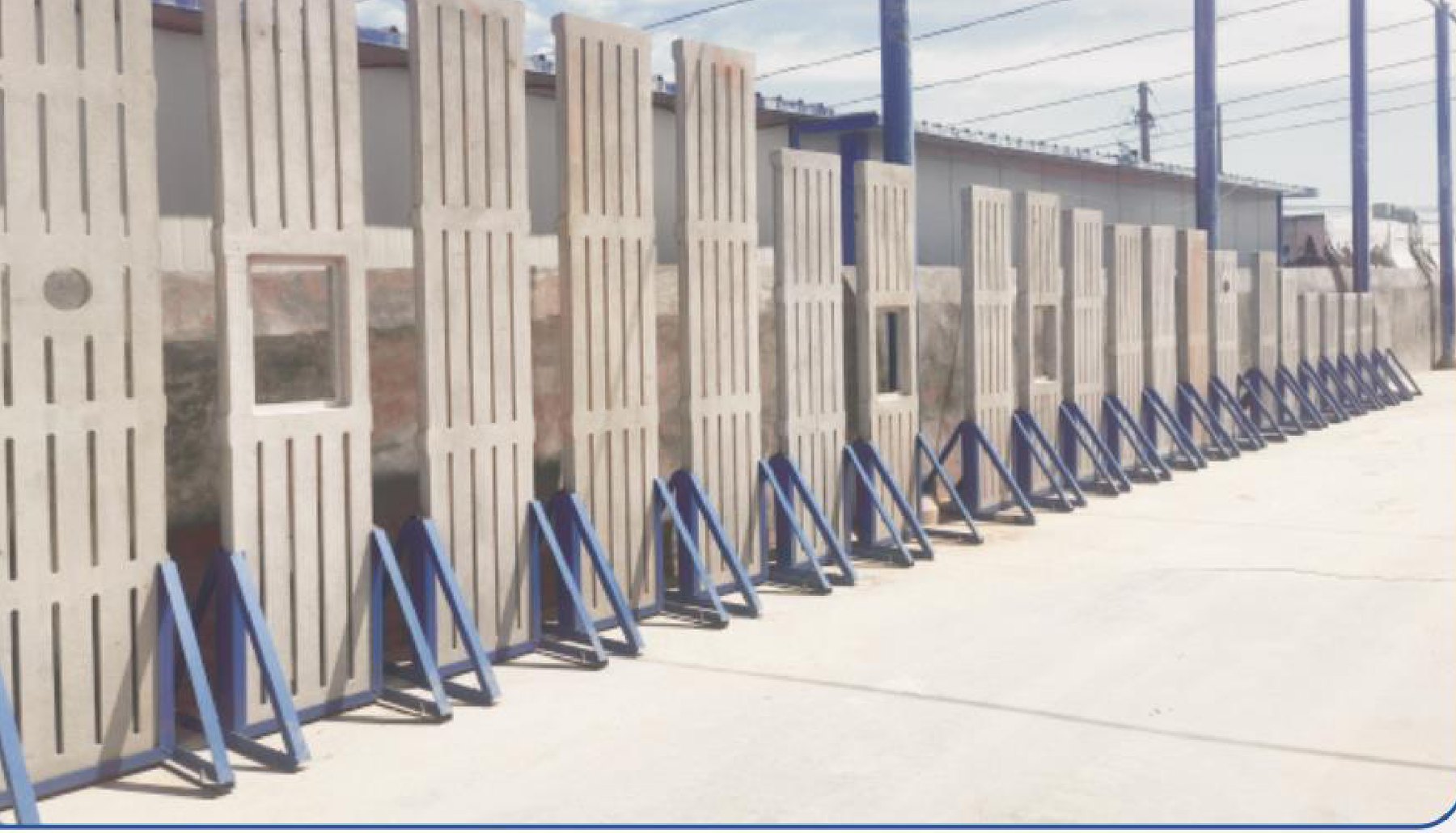
Finished penning panels awaiting dispatch.
Every equipment supplier offers a warranty. Very few can tell you who picks up the phone at seven on a Sunday morning, or which parts are on the shelf when they do.
What the warranty actually says
Every unit we ship carries a twelve-month warranty from the completion of installation. Under normal use, non-human damage is repaired or replaced at our cost. That is the standard promise, and it is worth exactly as much as the response behind it.
The three tiers
- Year one. Parts and labour covered. Faults logged, diagnosed and closed.
- Year two onward. Labour covered by KeMuHua; replacement parts charged at cost, with no margin added and no minimum order.
- Within two years of expiry. Repairs billed at half rate, parts at cost.
Installation is where service starts
Most of the faults we are called to are installation faults wearing a product's clothes: a fan mounted out of plumb, a pen frame anchored to a slab that was never levelled, a slat run laid without expansion allowance.
That is why installation is done by our own people — technicians, team leads and project managers trained inside the company, most of them with more than a decade on site. A subcontractor is paid to finish; an employee is paid to come back.
What the farm should have ready
Response time is decided as much by the caller as by the supplier. A fault report with these four things in it can be diagnosed on the first call instead of the third:
- The serial or batch number from the unit's plate.
- Two photographs — one wide, one close.
- The date the unit went into service, and what changed on site in the days before the fault.
- What the system was doing at the time: load, temperature, feed line state.
The clock starts when the phone is answered, not when the email is read.
Why we publish the numbers
Twenty-four hours and seventy-two hours are not marketing figures. They are the operating targets our service teams are measured against, and publishing them is a way of making ourselves accountable to a number a customer can hold us to.
If a fault cannot be cleared in seventy-two hours, the protocol requires a written plan with a date — not a promise to look into it.
Written by the KeMuHua engineering team · Xinxiang, Henan
All articles